Instructional Design Manager

Health Online Education and Training Co., Ltd.
July 2024 - Present
A leading medical education platform in China, serving 700,000+ doctors and 200+ pharmaceutical clients, with training reach across 200+ cities. The company provides continuing medical education (CME), remote learning, and healthcare SaaS solutions.
📌 Role Overview
As Instructional Design Manager, I lead the instructional design strategy for the education department. I developed a CME instructional design guidebook, standardized course templates, and oversaw the creation of premium CME training programs in collaboration with top medical experts. I also drove a measurable improvement in teaching quality, positioning the company ahead of its biggest competitor.
🎯 Key Initiatives & Outcomes
1. CME Training Program Upgrade – Systematizing Instructional Design
Problem: Medical experts and project leaders lacked structured course design guidance, leading to inconsistent quality.
Solution: I created a Comprehensive CME Instructional Design Guidebook + Lesson Plan Templates to support learner-centered, evidence-based course development.
Key features of the guidebook:
-
Structured development of national-level CME projects
-
Bloom's Taxonomy for learning objectives
-
Backward Design (UbD framework) for instructional planning
-
Integration of cognitive science principles for content presentation
-
Covered 15 second-level and 86 third-level medical disciplines
Delivery channels:
-
Online teaching platform
-
Mobile app
-
WeChat mini-program
📌 The guide enabled self-directed, flexible learning — allowing healthcare professionals to choose resources based on their needs.
Guidebook Excerpt (Click the arrows to see more pages)


Here are screenshots of selected pages from the Instructional Design Guidebook I authored. The guidebook provides SMEs with a step-by-step framework to develop a complete CME course from start to finish. The course design follows the principles of UbD (Understanding by Design) backward design, with learning objectives written using Bloom's Taxonomy and instruction reinforced through case-based learning. The teaching approach also integrates cognitive science strategies such as active recall, metacognitive prompts, and concept maps.
2. CME Premium Training Programs – Flagship Product Line
Under my professional oversight as an education specialist, I led the development of a premium tier of CME courses, strictly following the instructional design models and principles outlined in my guidebook.
Scale & Collaboration:
-
Partnered with over 100 distinguished medical experts from top Chinese institutions, including:
-
Peking University Third Hospital
-
China-Japan Friendship Hospital
-
Capital Medical University Affiliated Hospitals
-
Course Coverage:
-
24 key medical courses
-
17 nationally accredited CME disciplines, including:
-
Clinical Internal Medicine & Surgery
-
Nursing
-
Public Health & Preventive Medicine
-
Pharmacy
-
Anesthesiology
-
(and more)
-
Design Philosophy:
"Rigorous academic standards + practical clinical advancements" — setting the benchmark for excellence in medical education.
📎 Sample video | Sample slides (available upon request)
 |  |  |
|---|---|---|
 |  |
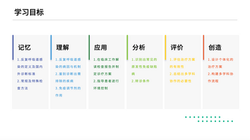
The diagrams are screenshots of course slides from a lesson on the diagnosis and treatment of recurrent respiratory tract infections (RRTIs) in children. They illustrate how the course aligns with Bloom's educational objectives. Case-based teaching is used to explain the diagnosis of RRTIs. A concept map is employed at the end of the course to help students summarize and organize the diagnostic and treatment process for RRTIs.
3. Data-Analysis - Measurable Competitive Advantage
After a year of dedicated effort, the company's teaching quality has pulled significantly ahead of its biggest competitor. It now leads the competitor across all three instructional dimensions.
.jpg)
🧰 Tools & Methodologies Used

🧠 Reflection Section
Reflection: From Designer to Design Leader
This role marks my transition from instructional designer to instructional design manager — where my impact is no longer just about building courses, but about building systems, standards, and teams.
What I learned:
-
Systematization scales quality: A single guidebook + templates enabled dozens of medical experts and project leaders to design consistently good courses without my direct involvement on every project.
-
Subject matter expert (SME) collaboration at scale: Working with nearly 100 distinguished healthcare professionals taught me how to balance academic rigor with pedagogical usability — and how to earn their trust as a non-medical professional.
-
Data tells a story: The fact that we pulled ahead of the competitor across all three instructional dimensions validated that instructional design strategy directly impacts business outcomes — not just learning outcomes.
-
Leadership means letting go: My job was not to design every course, but to create the conditions for others to design well.
What I would do differently next time:
-
Build a formal training workshop for medical experts on "how to use the guidebook" — rather than just handing it to them.
-
Create a feedback loop from learners (doctors) to continuously iterate the guidebook and templates.
How this shapes my ID philosophy today:
I now believe that instructional design at the managerial level is about leverage — creating tools, frameworks, and processes that multiply good design across an organization. My success is no longer measured by one course, but by the quality of hundreds of courses I never touched directly.
Contact
I’m always open to meaningful conversations. Let’s connect — whether for opportunities, ideas, or collaborations in learning design.
(+86)175-2683-5198